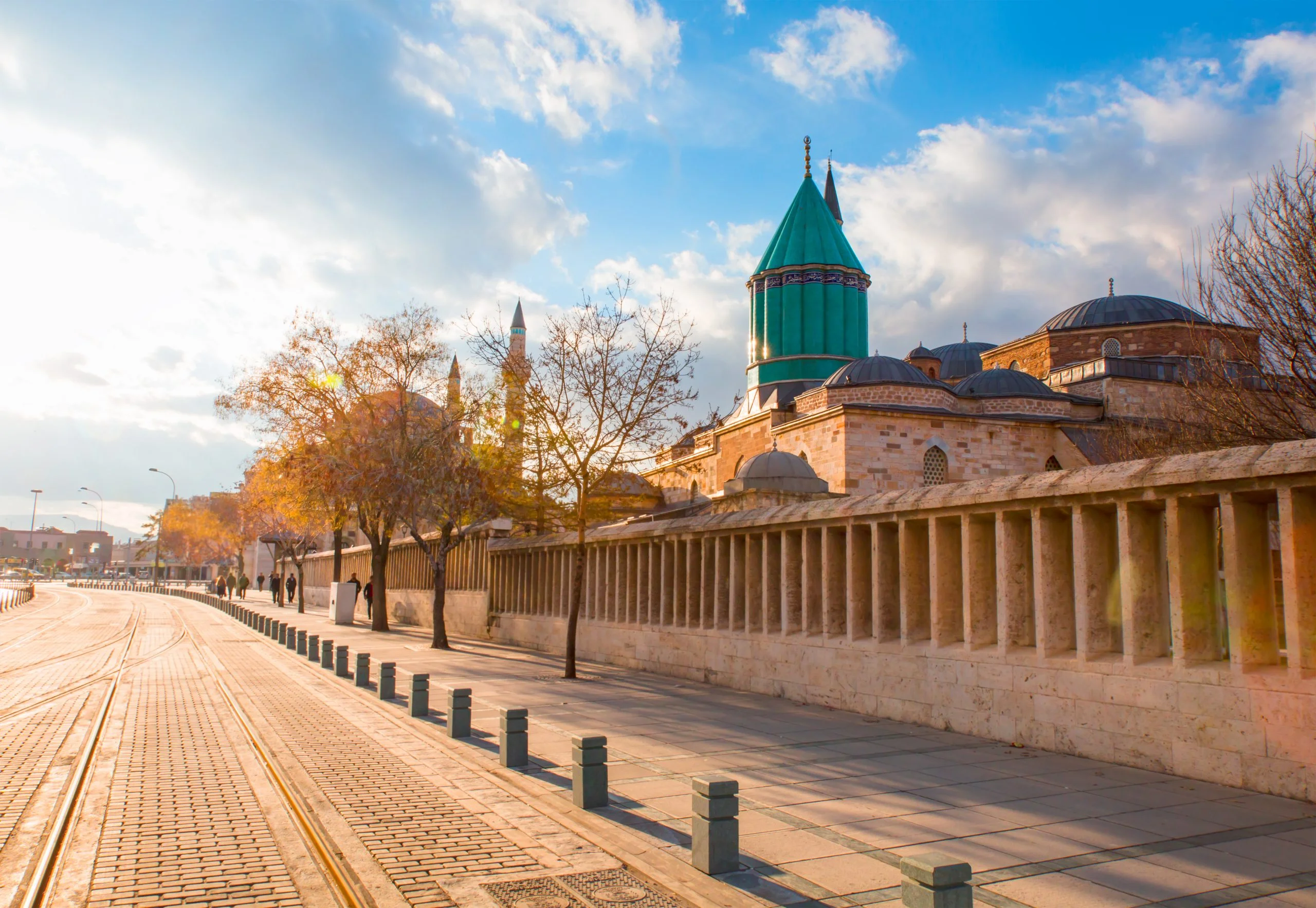
KONYA
Konyais the largest province located in the Central Anatolia Region of Turkey. It is known for its affluenthistorical heritage, profoundcultural traditions, and significance in both ancient and Islamic civilizations. Today, it is one of Turkey’s most culturally conservative and agriculturally productive provinces.
Chronological Historical Development
Prehistoric and Ancient Periods (Before 1st millennium BCE)
-
- Çatalhöyük (c. 7500–5700 BCE): One of the world's earliest known urban settlements is located near Konya. It is a UNESCO World Heritage Site and provides key insights into Neolithic life.
-
- The region has evidence of continuous habitation since Paleolithic times, indicating its long-standing human activity.
Hittite Period (c. 1600–1200 BCE)
-
- The area around Konya was part of the Hittite Empire, one of the dominant powers of ancient Anatolia.
-
- Archaeological evidence shows the presence of Hittite religious and administrative centers.
Phrygian, Lydian, and Persian Rule (c. 8th–4th century BCE)
-
- Following the collapse of the Hittites, Phrygians controlled the region, succeeded by the Lydians and eventually the Achaemenid Persians after 547 BCE.
Hellenistic and Roman Period (333 BCE – 4th century CE)
-
- After Alexander the Great's conquest, the region became part of the Hellenistic Seleucid Kingdom and then passed to Roman rule.
-
- During this time, Konya was known as Iconium, a city that flourished within the Roman province of Lycaonia.
Byzantine Period (4th–11th century CE)
-
- Konya remained under Eastern Roman (Byzantine) control for several centuries.
-
- It was an important Christian center, and the city’s name "Iconium" is mentioned in the New Testament (Acts of the Apostles).
Seljuk Period (1071–1308)
-
- Following the Battle of Manzikert (1071), Konya came under Seljuk Turkish rule.
-
- Became the capital of the Anatolian Seljuk Sultanate in the 12th century.
-
- This period marked Konya's golden age in terms of architecture, philosophy, and trade.
-
- The city attracted scholars and mystics, most notably Jalal ad-Din Rumi (Mevlana), who settled there in 1244.
Ottoman Period (15th–20th century)
-
- Incorporated into the Ottoman Empire by Sultan Bayezid I in the late 14th century.
-
- Retained regional importance as an administrative and agricultural center.
-
- The Mevlevi Sufi Order, founded by Rumi’s followers, continued to thrive under Ottoman patronage.
Republican Era (1923–Present)
-
- After the founding of the Republic of Turkey, Konya became a major provincial capital.
-
- Today, it is known for its Islamic conservatism, strong agricultural economy, and cultural tourism, particularly the Mevlana Museum and Whirling Dervishes ceremonies.
Cultural Features
-
- Mevlana Celaleddin Rumi: The Persian-born Sufi poet and thinker, whose tomb is in Konya, is a central cultural and spiritual figure.
-
- Mevlevi Order: The Sufi order associated with Rumi; its Whirling Dervish rituals are inscribed in UNESCO’s Intangible Cultural Heritage.
-
- Seljuk Architecture: Notable structures include Alaeddin Mosque, Karatay Medrese, and Ince Minareli Medrese, showcasing intricate stone carvings and tilework.
-
- Cuisine: Famous for dishes such as etli ekmek, tirit, and arabaşı çorbası.
-
- Conservatism: Konya is often cited as a symbol of traditional Turkish and Islamic values.